The Wallace Fountains
After the Siege, potable water in Paris was scarce – and very expensive – and many Parisians…

The Siege of Paris and the Commune 1870/1saw 4,500 British being provided with food and other essentials and 500 repatriations successfully organised by the British Charitable Fund, thanks largely to the “most private, mysterious and unexpectedly philanthropic of Victorians”.
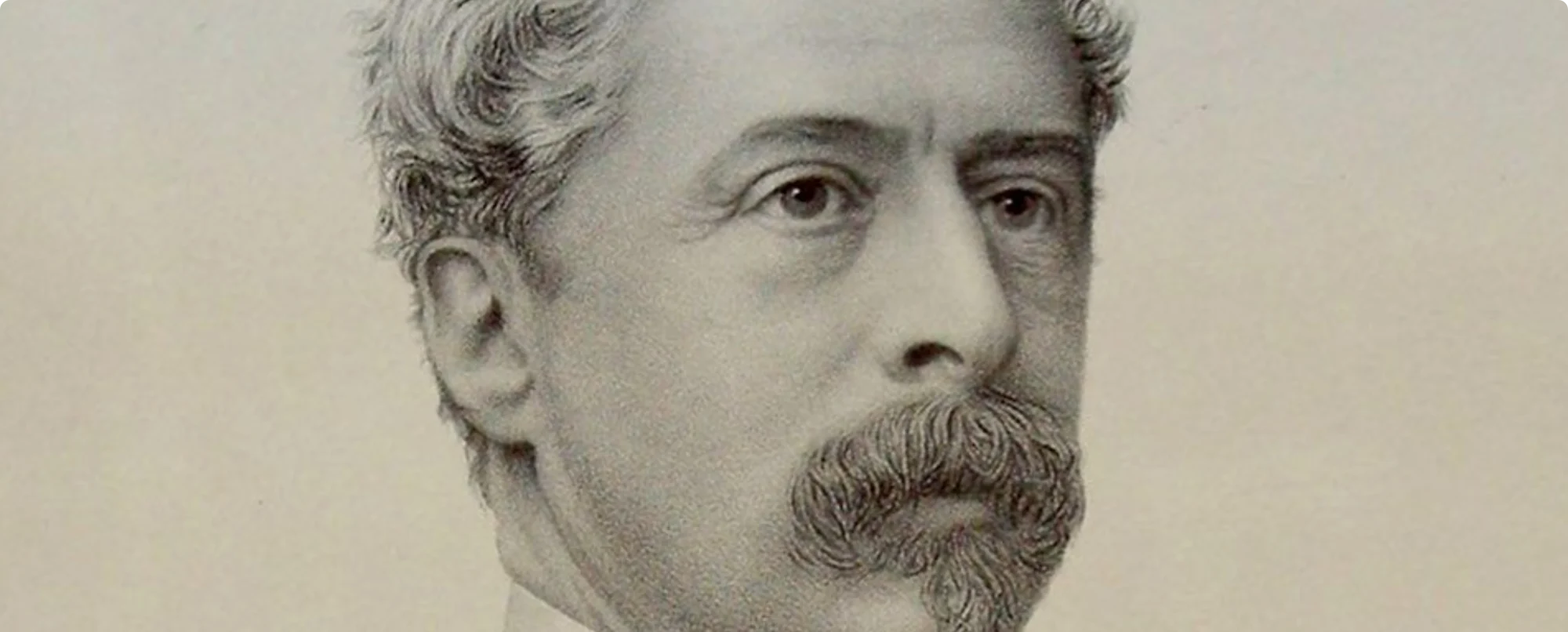
Of all the British residents in Paris during the Siege, by far the most personally popular was a tall figure with a grizzled moustache’, who, ‘accompanied by a black and tan retriever dog, made his way from one Mayoral centre to another, leaving at each place a large packet of banknotes for the relief of the poor of the district.’
‘He looked like a Frenchman to the end of his days, spoke with a French accent , and was always courteous, courtly and charming.’
.
Biography
Born in 1818
Death 1890
«Chairman of the british charitable
fund, paris 1870 to– 1890»
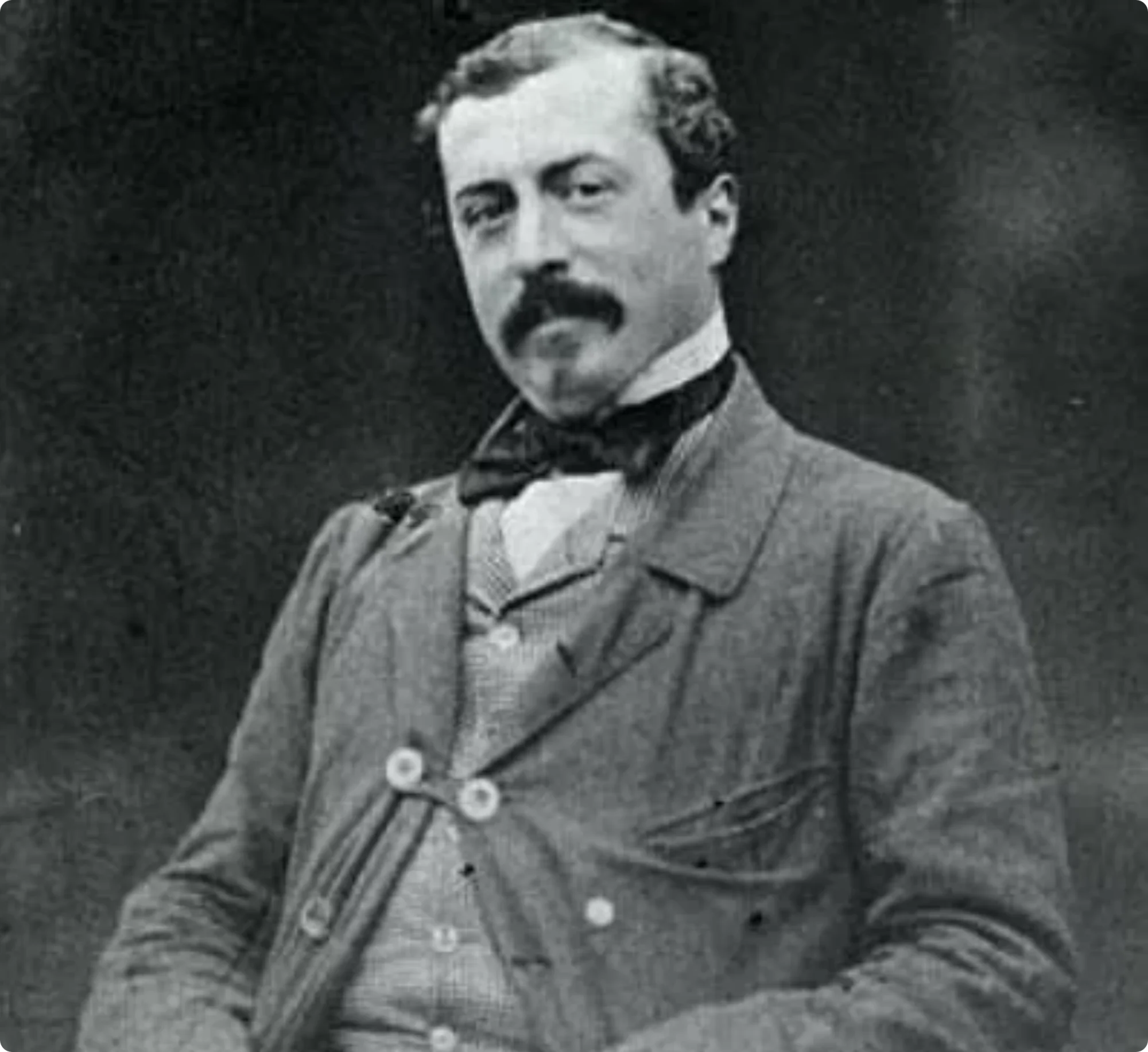
Sir Richard Wallace was born in England in 1818, son of the 4th Marquess of Hertford. He spent his childhood at his father’s home, the Chateau de Bagatelle in the Bois de Boulogne, and later became his secretary. In July 1870, at the age of 52, he became one of the richest men in Europe when is father died, leaving him a huge estate and a priceless art collection.
One month later, the Prussians were to place Paris under siege and Wallace’s connection with the British Charitable Fund began. This connection was to last until his death 20 years later in 1890.
Since 1823 the Charity’s ledgers had neatly recorded the bene?ciaries’ stories and the grants awarded to them. But over the months of the Siege, the ledgers quickly turned into a simple and ever-lengthening list of names, with columns for staple goods such as chocolate, bread, rice, soup and ‘Liebig’ meat extract. As the crisis worsened, starvation became a common occurence.
Several thousand English people were trapped in the city, 800 of them destitute; the Committee was already coping with increasing numbers in desperate need of assistance.
Sir Richard Wallace was aware of the charity and immediately volunteered to help. He joined the small group of Committee members dispensing aid to the long lines of people queuing for help.
And as the situation grew increasingly desperate, Sir Richard donated more and more money into the Fund.
The comittee apointed him chairman in 1870, a post he held until his death in 1890. There is no doubt that hundreds of British men, women and children would have died of cold and hunger without his support.
“British subjects are being kept from starvation by the Committee (British Charitable Fund) for the distribution of charity to the distressed English in Paris. Between August and December 1870, 68,000 francs was spent on relief of British subjects in Paris, one third of which was contributed by Mr. Richard Wallace.”
By the end of the Siege and the Commune, his contributions to relief of both French and British citizens and the provision of two field hospitals for the sick and wounded are estimated to have totalled 2.5 million francs, a very significant sum at that time.
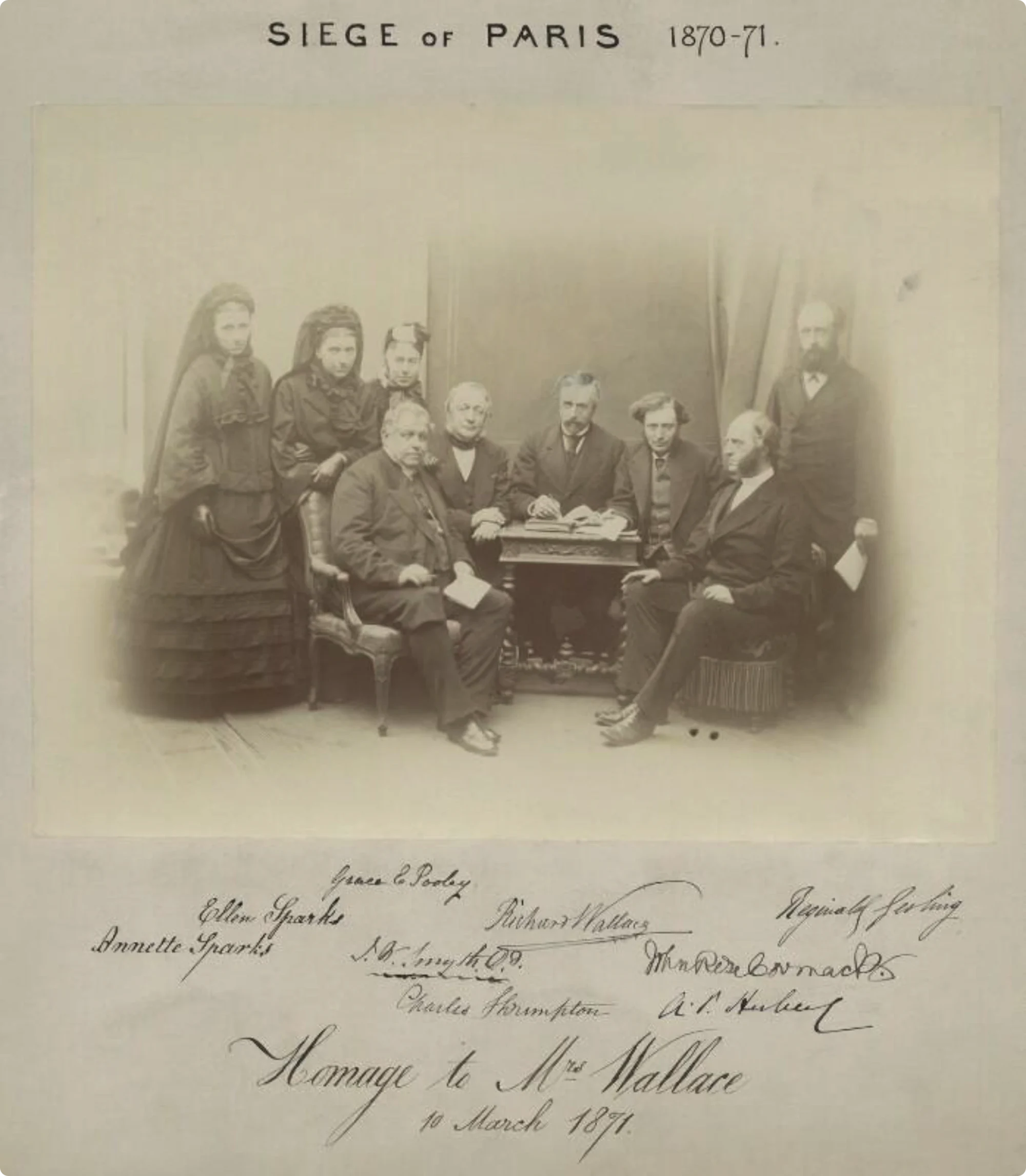
In early 1871, the BCF Committee agreed a vote of thanks to Sir Richard Wallace for “his munificent assistance” to the English poor in Paris during the successive periods of the siege” and a commemorative photograph, now in the National Portrait Gallery, was taken of the team that had worked hard throughout such dreadful times to help their fellow countrymen.
Once the crisis had passed, honours were awarded to this great philanthropist. From France he received the Legion of Honour and in England Queen Victoria conferred on him a baronetcy.
Sir Robert Peel said in Parliament: ‘It is impossible for any Englishman to speak in higher terms than I would of the philanthropy and conduct of Mr. Wallace during the whole time of the siege’
Disheartened by the Siege and the destruction of the city by the Communards, Sir Richard decided to leave Paris for London, where he and his wife took up residence in Hertford House, now home to the Wallace Collection.
He continued his humanitarian work in Paris, building a hospital in Levallois and gifting the famous Wallace drinking fountains to the poor of the city. His attachment to the British Charitable Fund also continued. He remained Chairman until 1890 and every year contributed generously to its work.
After the death of his only son in 1887, Sir Richard returned to his chateau, where he lived alone, almost as a recluse, until his death in 1890. He was buried in the Hertford family vault in the Père Lachaise cemetery in Paris.
For the French he is ‘le grand philanthrope dont la mémoire restera chère à la population parisienne.’
For the British Charitable Fund this extraordinary and deeply compassionate man stands out as the greatest of its many benefactors and a stalwart partner in the fight against poverty in the British community in 19th century France.
The HBCF of today is proud to maintain the tradition set by Sir Richard
Wallace.
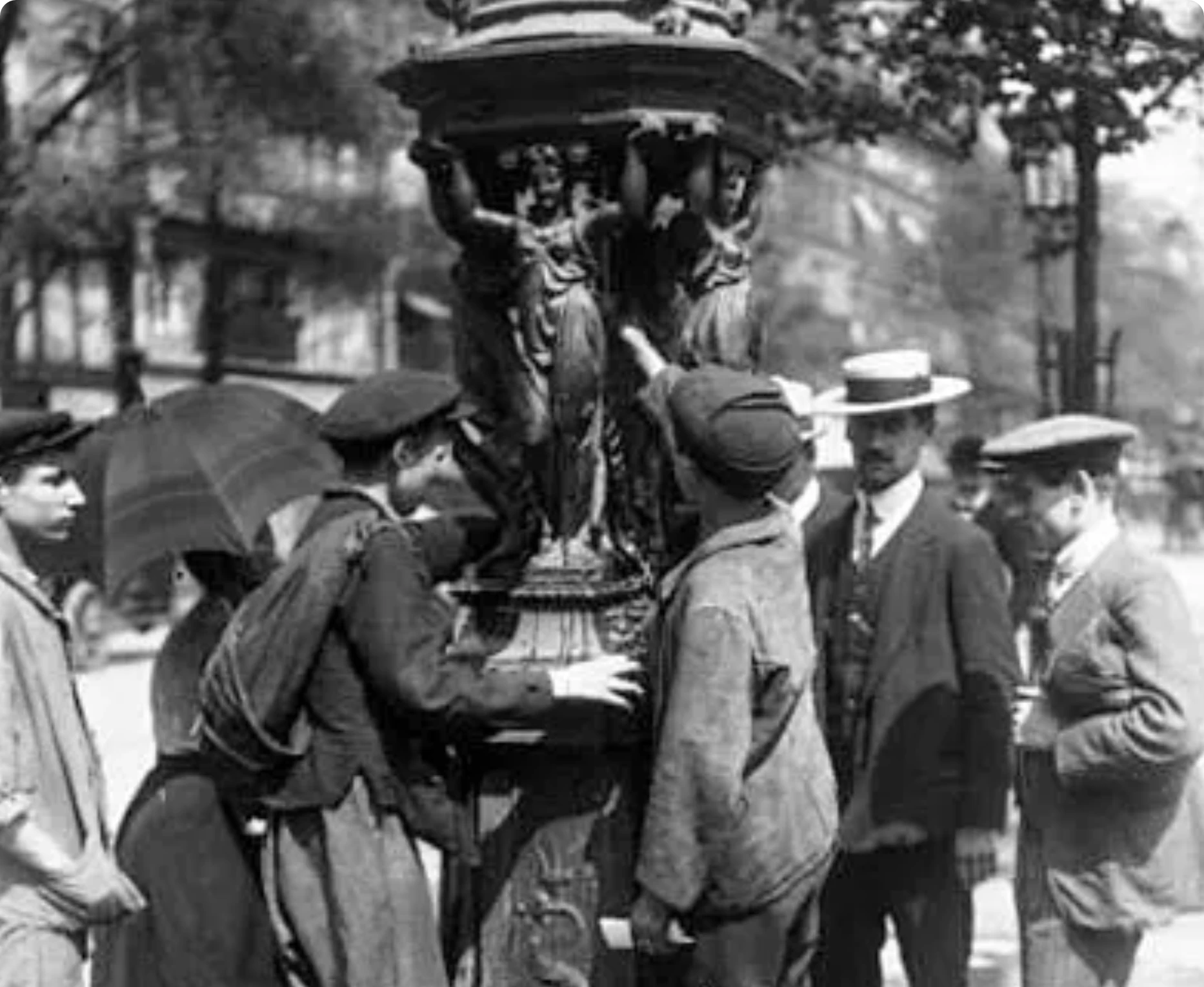
After the Siege, potable water in Paris was scarce – and very expensive – and many Parisians…
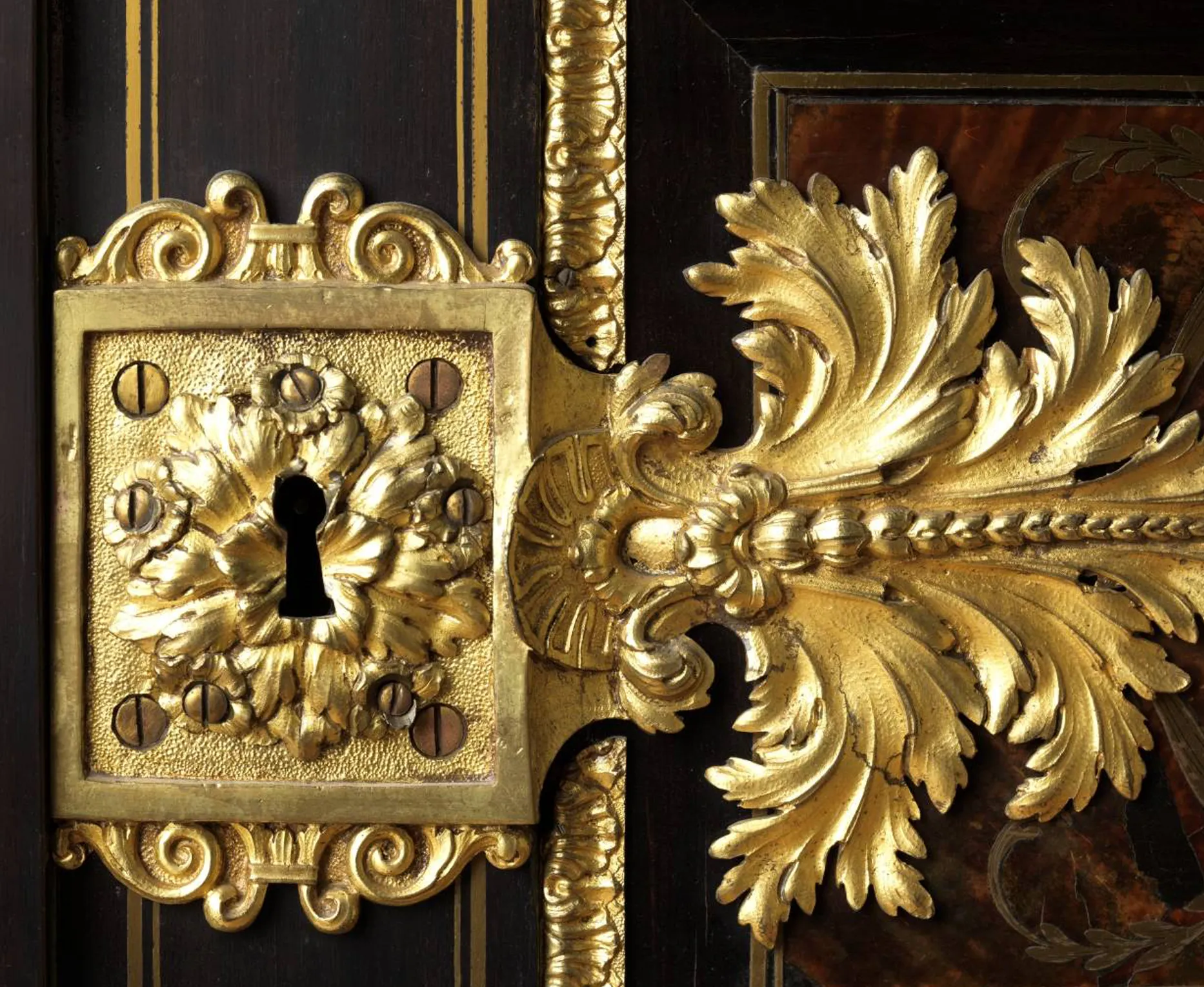
National museum housing unsurpassed mas-terpieces of painting, sculpture, furniture
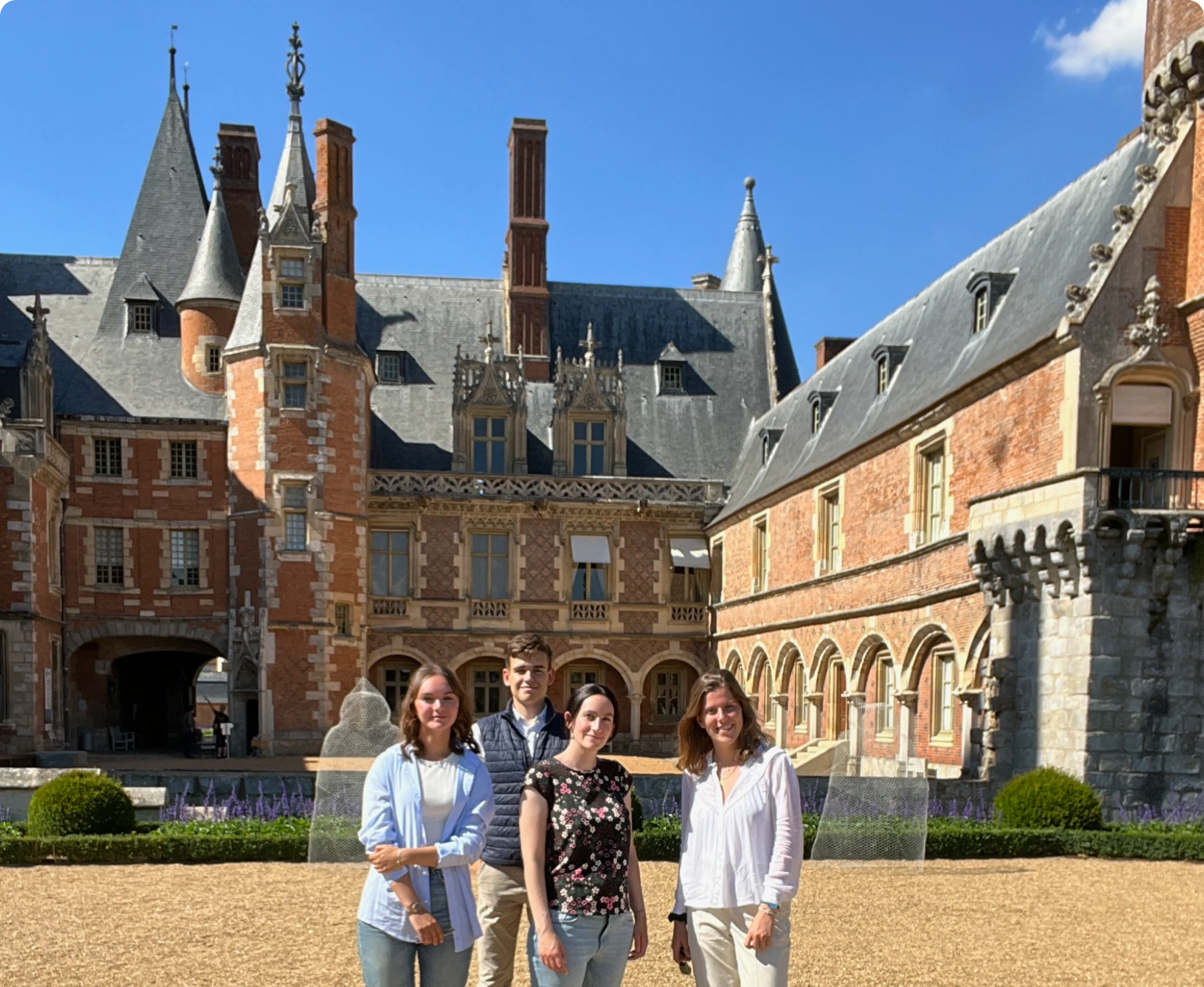
The Mansart Foundation is an umbrella founda-tion which aims to conserve and promote...
